April 25 — During the fourth session of the Intergovernmental Negotiating Committee (INC-4), convened to develop a legally binding international instrument to end plastic pollution, Contact Groups 1 and 2 advanced in-depth technical discussions, while the Women’s Major Group (WMG) strengthened its strategic coordination and advocacy agenda focused on health and meaningful participation.
Progress in the Contact Groups
Contact Group 1
Within Subgroup 1.2, delegates discussed issues related to plastic product design, composition, and performance, as well as non-plastic substitutes.
Key discussion points included:
- Strong support for measures enhancing plastic product design, with proposals for legally binding provisions.
- Calls for clarity on implementation measures prior to agreement, including nationally determined targets and timelines.
- Consideration of waste hierarchy approaches and reuse systems, while opposing uniform targets due to varying national waste management capacities.
- Inclusion of recycled plastic content within waste management discussions.
- Debate on whether alternative plastics and products should be exempt from regulations.
- Emphasis on safe and environmentally sound substitutes, subject to lifecycle assessments, with proposals for global criteria, technology transfer, and financial resources.
- Focus on science-based approaches and dialogue with traditional knowledge systems.
- Discussions on dedicated programs of work, primary plastic polymers, chemicals and polymers of concern, problematic and avoidable plastic products, and exemptions.
In Subgroup 1.3, deliberations focused on extended producer responsibility (EPR) and plastic emissions and releases throughout the lifecycle.
Discussions included:
- Support for voluntary EPR schemes with effective traceability and accountability mechanisms.
- Calls for enhanced international cooperation.
- Consideration of national circumstances and capacities, with diverging views between global schemes and voluntary guidelines.
- Concerns over economic and food security impacts, alongside strong calls for a just transition.
- Support for measures addressing emissions and releases across the entire plastic lifecycle.
- Emphasis on means of implementation, avoidance of duplication with existing frameworks, and linkages to monitoring and periodic assessment mechanisms.
Contact Group 2
In Subgroup 2.1, discussions focused on the nature, functions, and governance of the financial mechanism, as well as resource mobilization.
Key issues included:
- Diverging views on the role of the Global Environment Facility (GEF) versus the establishment of a standalone financial mechanism.
- Concerns regarding GDP-based eligibility criteria disadvantaging Small Island Developing States (SIDS) and Least Developed Countries (LDCs).
- Debate over voluntary versus mandatory contributions and the potential role of private sector financing.
- Strong emphasis on distinguishing domestic and international funding sources.
- Support for developed countries to provide new and additional financial resources, alongside proposals to broaden the donor base.
In Subgroup 2.2, discussions addressed progress reporting, periodic assessment and monitoring, international cooperation, and information exchange.
Key elements included:
- The importance of a common reporting framework, differentiated timelines, and transparency.
- Concerns regarding confidentiality and potential misuse of disclosed information.
- Debate over the need for periodic effectiveness evaluations and the possible establishment of an evaluation committee.
- Diverging views on reviewing chemicals and polymers of concern.
- Emphasis on needs-based international cooperation and avoiding undue burdens on developing countries.
- Proposals for information exchange mechanisms, including Indigenous Peoples’ knowledge and the establishment of a clearinghouse mechanism.
Women’s Major Group Meeting
During the Women’s Major Group meeting, final preparations were coordinated for the Lunch for Women Delegates, scheduled for Friday, April 26.
Participants agreed to draft a WMG priorities document focusing on:
- Human health, particularly impacts on women and children.
- Meaningful participation of Major Groups.
- Integration of scientific evidence on the impacts of microplastics and nanoplastics in everyday products.
Key outcomes included:
- Strong consensus on addressing plastic-related health impacts as a central element of the treaty.
- Advocacy for the inclusion of chemicals of concern across all treaty articles.
- Calls for storytelling supported by data and concrete examples, including statistics on microplastics found in newborns.
- Concerns regarding microplastics and chemicals in food and personal care products.
- Advocacy for restrictions or bans on microbeads and microplastics.
- Warnings about toxic releases from plastic packaging exposed to sunlight.
- Support for water justice and opposition to plastic bottles and water bags.
- Emphasis on transparency across the entire plastic lifecycle.
- Reflections on the limits of circular economy approaches.
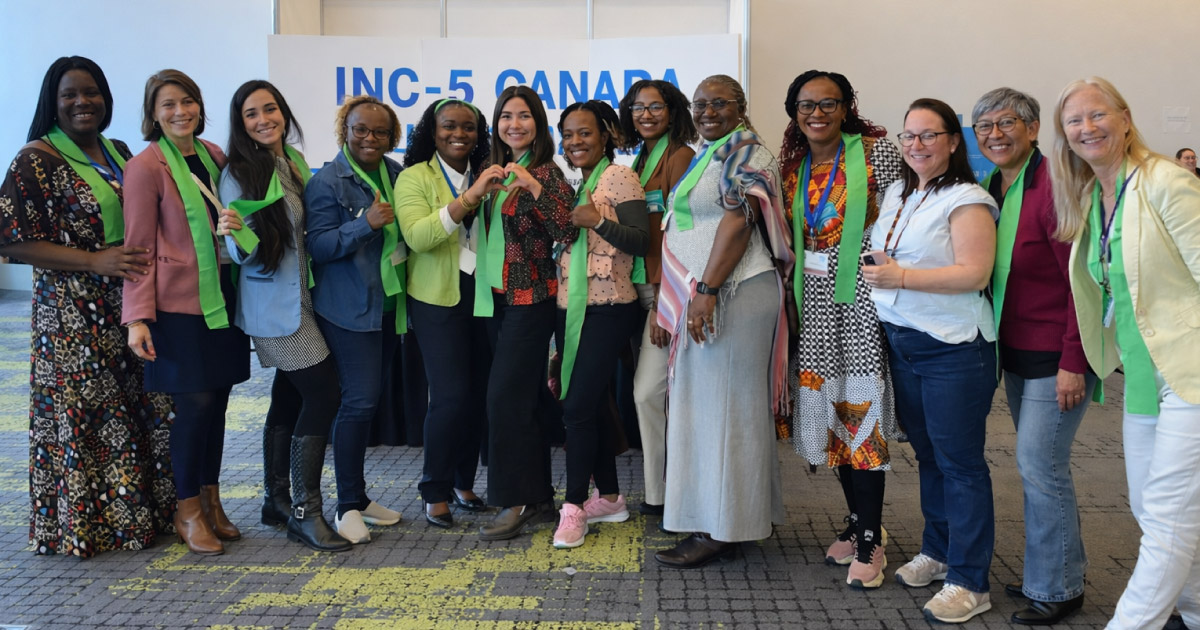
The group also agreed to prepare an official statement for the following day’s plenary, with a draft document circulated and inputs accepted until 7:00 p.m. The day concluded with the official group photograph.